
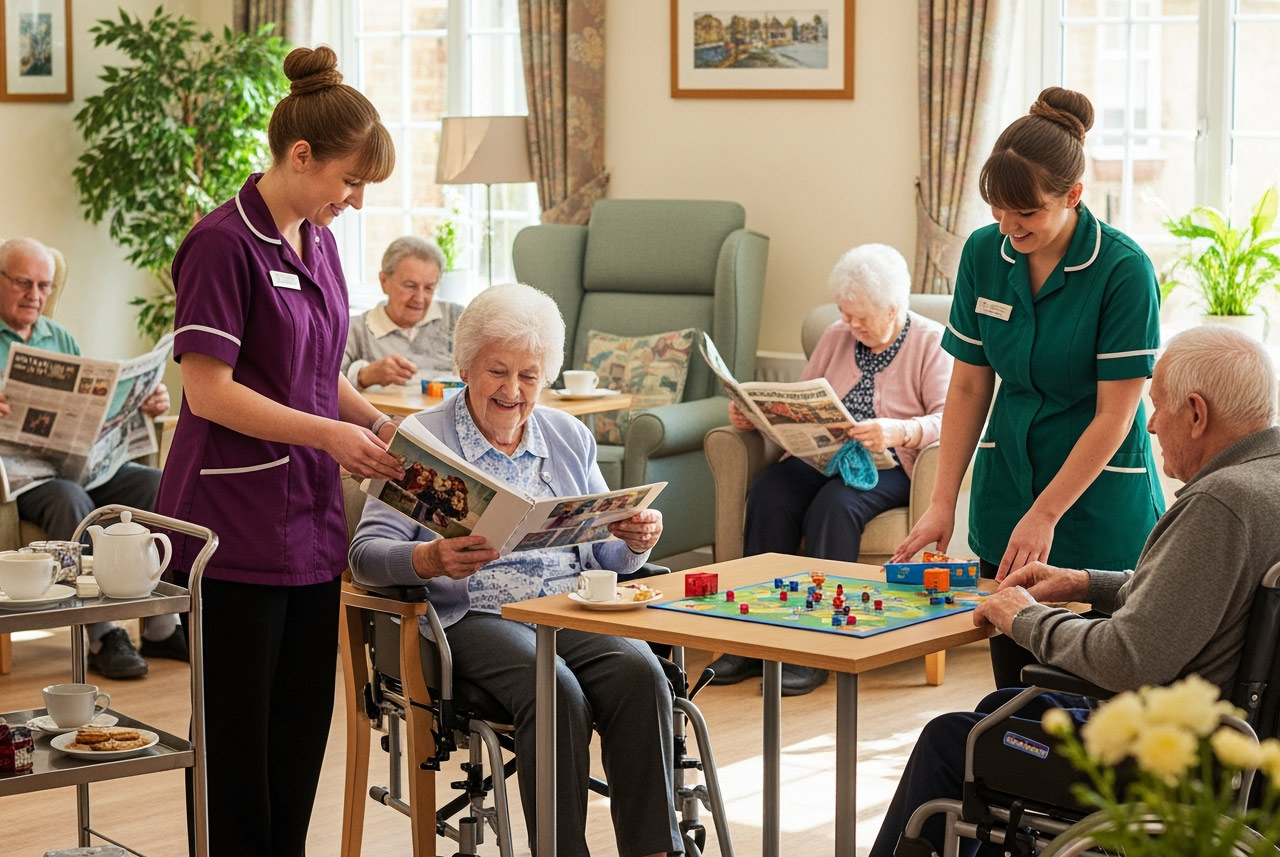
A care home is more than a building: it’s someone’s home. Residents need to feel comfortable and safe. They are looking for somewhere to ease their pains rather than cause them more problems. Their visitors – friends and family – want to know their loved one is being cared for. A failed lift or unreliable heating indicate the exact opposite.
Any building or equipment issues can disturb residents, causing unnecessary worry and distress, placing extra pressure on care teams that are already under strain. Operators have the difficult task of maintaining a safe, welcoming environment in the face of rising costs, staff shortages and growing expectations from residents and their families.
The Care Quality Commission (CQC) inspects and rates health and care services in England. Inspections don’t follow a fixed timetable. The frequency depends on the risks previously identified the most recent rating. They are looking for a clear connection between safe premises, safe care and effective governance.
Being ready for an inspection, rather than doing a last-minute search for documents, can help considerable ease the pressure they cause. Here are three insights to support care home operators with their preparations:
1. A completed check is not a closed risk
A faulty fire door or water hygiene issue may be logged by a specialist, passed through to maintenance and discussed with the registered manager. But is everyone clear about who owns the response, when it is due and whether it has been checked? While a certificate confirms action has been taken, it does not show the risk has been properly addressed.
Relevant CQC Regulations:
- Regulation 15 covers the cleanliness, suitability, security, use and maintenance of premises and equipment.
- Regulation 12 addresses safe care, including safe premises and equipment and managing risks to people receiving care.
Operators need to show there is a clear link from identifying a defect to managing its impact on residents and evidencing the response.
2. Good governance needs visibility across every home
Care home operators are required to show they are doing all that is necessary to keep their properties and their residents safe. The goes deeper than keeping records; they need to show they understand risks and are acting on them.
Relevant CQC Regulations:
- Regulation 17: CQC’s guidance calls for effective governance, assurance and auditing systems that monitor quality and safety, manage risks and drive improvement.
For operators of just one care home, this means joining maintenance records, assessments and outstanding actions. For a group with two or more care homes, it also means seeing where repeated faults or overdue work need support across the portfolio.
A consistent view helps registered managers and central teams agree priorities without relying on spreadsheets, inboxes and someone’s memory. The evidence should follow the work—not become another task for the care team.
One good test to make sure you are ready for an inspection is considering what you would say if you were asked about an unresolved risk. Could your manager and team show the status of that risk, say who owns it, articulate what steps are needed to resolve it and provide supporting evidence? If the answer is no to any of these, then there is work to be done.
3. Outsourcing the work does not outsource accountability
Maintenance work at care homes is often carried out by outside suppliers. It is the owner’s responsibility to make sure these contractors have the right certification and insurances.
Relevant CQC Regulations:
- Regulation 15: CQC’s guidance makes clear that providers retain legal responsibility when premises or equipment responsibilities are delegated to contractors or suppliers. A maintenance contract is therefore not the end of the process. The provider still needs confidence that work is appropriate, completed and followed through.
For private care home operators, procurement decisions need to be done for each facility: current supplier checks, a clear scope, access arrangements coordinated with the home and a dependable out-of-hours response.
Questions to ask at your next care home assurance meeting
Facilities management:
- Can we see overdue servicing, recurring failures and outstanding remedials for each care home?
- What are the implications for residents’ daily routines and continuity of care?
Health & safety:
- Can we trace a risk assessment finding through to an owner, action and evidence of closure, giving the registered manager a clear picture of what remains unresolved?
Procurement:
- Can each home see whether a contractor meets our current requirements, what work is authorised and where the service and completion records will be held?
For private care home operators, procurement decisions need to be done for each facility: current supplier checks, a clear scope, access arrangements coordinated with the home and a dependable out-of-hours response.
Connect the decision, the work and the evidence
Vantify brings together compliance, facilities and service provider information through connected software and expert services. For private care operators, the starting point is better visibility between each home and the central team—not another disconnected reporting task.
- Vantify Risk Manager brings documents, inspections and actions into one view.
- Vantify CAFM connects assets, planned and reactive maintenance, backed by a 24/7 service desk.
- Vantify Supply Chain provides service provider oversight, including document checks and visibility of insurance, certifications and financial health.
Bringing these three products together helps teams move from identifying an issue to managing the response.
Do any of these issues sounds familiar?
Speak to us about how we can better support your teams to be inspection-ready through truly connected compliance.
Sources: CQC guidance—Regulation 12: Safe care and treatment; Regulation 15: Premises and equipment; Regulation 17: Good governance. Product information: Vantify ecosystem. CQC regulates in England; other UK nations have different regulators. This perspective is not legal or technical guidance. Software supports assurance but does not guarantee compliance or a CQC rating.