
It’s a sad truth that in 2026, where supply chains span across continents, we are still fighting against the exploitation of human beings through modern slavery.
Modern slavery encompasses various forms of exploitation, including forced labour, human trafficking, debt bondage, and child labour. It strips individuals of their freedom, dignity, and basic human rights, subjecting them to inhumane conditions and often physical and psychological abuse.
In 2025, the Home Office received 23,411 referrals of potential modern slavery victims, a 22% increase from the previous year. The real number of people trapped in slavery is likely to be far higher, with some estimates suggesting there are more than 130,000 victims in the UK alone.
It goes without saying that any businesses associated with modern slavery will seriously damage their professional reputation, as well as losing clients and investors.
For facilities management businesses, the stakes are particularly high. Managing multi-site operations means working with a vast network of suppliers and contractors, and every single one is a potential risk if left unchecked. In an industry that demands good compliance, a single supply chain failure can destroy relationships and reputations that have taken years to build. It may shock you to learn that 69% of businesses believe they lack the necessary visibility over their supply chains in order to protect their reputations. Without that visibility, the conditions for modern slavery take root, and poor supply chain practices go unnoticed, unchallenged, and unresolved.
What is the impact of modern slavery on people and businesses?
The consequences of modern slavery are far-reaching and devastating. Victims endure unimaginable suffering, robbed of their autonomy and trapped in cycles of exploitation.
For businesses, the reputational damage resulting from associations with modern slavery can be catastrophic. Consumer trust erodes, brand equity diminishes, and legal and financial repercussions can be severe. Companies that fail to address this issue risk tarnishing their image and losing the confidence of stakeholders, customers, and the broader public.
The Modern Slavery Act 2015 sets out clear offences and ensures that those found guilty, including businesses that fail to exercise adequate due diligence, face appropriate consequences. In short, ignorance is no longer a defence.
What does modern slavery look like in a real business context?
In 2020, Boohoo Group claimed to have a “zero-tolerance approach to incidences of modern slavery”, but they also faced allegations regarding potential breaches of the UK’s Modern Slavery Act.
When a Sunday Times investigation exposed the conditions inside its Leicester factories, it revealed that workers were being paid as little as £3.50 an hour. The factory was also alleged to have continued operating through a local coronavirus lockdown without appropriate safety measures in place.
The consequences were immediate and brutal. Boohoo’s share price plummeted, retail partners publicly cut ties, and the National Crime Agency launched a formal investigation.
The lesson here is that having a policy on paper means nothing without the systems to back it up. A zero-tolerance statement is not a compliance strategy; when you lack clear visibility of your suppliers and contractors, you leave your business open to reputational, legal, and financial damage that can take years to recover from- if you recover at all.
How to take action to ensure compliance and ethical practices?
Conduct thorough due diligence
Implement rigorous screening processes to assess potential suppliers and contractors for any links to modern slavery.
Establish clear policies and codes of conduct
Develop and enforce comprehensive policies that explicitly prohibit any form of modern slavery within your supply chain, and ensure these are communicated clearly to all suppliers and contractors.
Provide training and awareness
Educate employees on identifying and reporting potential instances of modern slavery in the supply chain.
Collaborate and engage
Work closely with industry partners and stakeholders to share best practice, promote transparency, and drive collective action. Modern slavery is an industry-wide challenge that demands an industry-wide response.
Implement monitoring and auditing systems
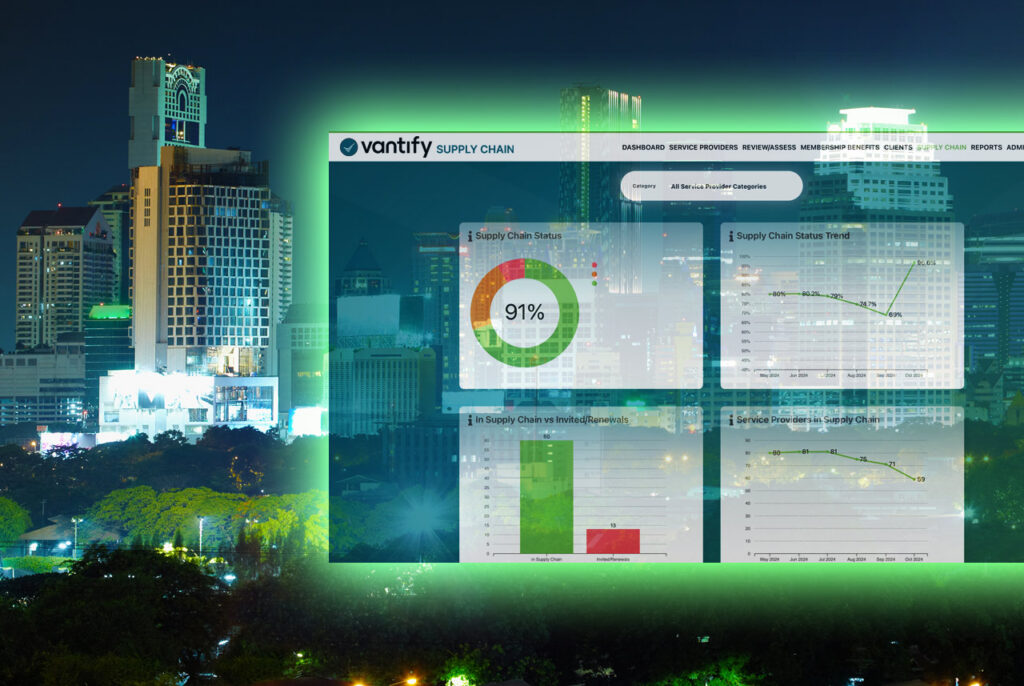
Regular monitoring and auditing of suppliers and contractors is essential to maintaining compliance and identifying issues before they escalate. Vantify Supply Chainis a platform which gives businesses full visibility of their supply chain, tracking contractor performance, monitoring certifications, and providing bespoke assessments tailored to each client’s exact requirements.
By taking these steps, businesses can not only protect themselves from risk but actively contribute to the global effort to eradicate modern slavery and build supply chains that are ethical, transparent, and sustainable. In today’s regulatory and commercial environment, that isn’t just the right thing to do, it’s a business imperative.
Vantify Supply Chain helps you ensure compliance, mitigate risk, and streamline procurement processes. This intuitive platform enables businesses to carry out pre-qualified assessments covering the full range of ESG practices, including modern slavery, equality and inclusion, quality, and sustainability. This gives facilities management businesses the confidence that everyone they work with shares their commitment to ethical standards.
Fighting modern slavery starts with understanding it, because without that knowledge, businesses can’t identify the warning signs, ask the right questions, or hold their supply chains to account. Vantify’s eLearning platform offers comprehensive, accessible training that keeps you and your wider business informed; this helps to ensure your organisation isn’t unknowingly connected to exploitative practices, whether directly or through supplier relationships.
0203 337 3575
enquiries@vantify.com